
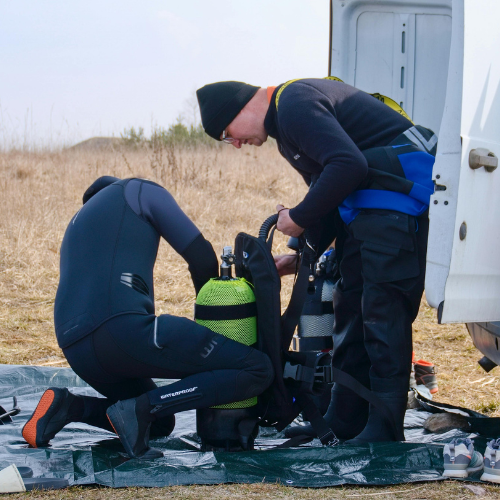
Your Dive Starts Before You Hit the Water
Your computer knows your depth and bottom time. It doesn’t know how you feel.
When we think about dive safety, most of us think about what happens once we enter the water: depth, bottom time, air consumption, ascent rate and, of course, that safety stop. But there’s another part of the dive plan that deserves just as much attention—the condition of the diver before the dive ever begins.
Think about it. Your dive computer knows how deep you go and how long you stay there. It doesn’t know you only slept four hours last night. It doesn’t know you spent all morning hauling gear, skipped breakfast, just finished a long drive, are getting over a cold or woke up feeling a little “off.” Yet all of those things become part of the physical condition you bring underwater with you.
The Facts (Physical and Mental) Before the Dive
Recent dive-medicine guidance from Divers Alert Network (DAN) encourages divers to think about decompression stress as something that exists on a much larger timeline than just the minutes spent underwater. Sleep, travel, fatigue, illness, hydration, alcohol consumption and physical exertion can all affect how prepared your body is to handle the additional stresses of diving.
That doesn’t mean being tired or mildly dehydrated automatically causes decompression sickness. Dive physiology is far more complicated than that. Instead, think about these things as pieces of your overall safety margin. One small factor might not mean much on its own. Start stacking several of them together, though, and you may be beginning the dive with less reserve than you normally have.
Hydration is a good example. Divers have long heard “stay hydrated” as a rule of thumb, and appropriate hydration is certainly important. But more isn’t necessarily better. DAN’s current guidance is to begin a dive normally hydrated—not dehydrated and not trying to force excessive amounts of water into your body before entering the water.
Fatigue deserves attention too. Lack of sleep doesn’t just make you tired. It can affect attention, reaction time, judgment and decision-making—the very abilities we count on when something unexpected happens underwater. Add strenuous activity, travel fatigue or feeling under the weather, and that easy recreational dive may be asking more of your body than you realize.
Check the Diver, Not Just the Gear
We’re taught to check our equipment before a dive. Maybe we should make checking ourselves just as routine.
Also consider whether you’ve been drinking alcohol recently or have already physically worn yourself out that day. These aren’t questions meant to talk you out of diving. They’re simply another part of making a thoughtful dive plan.
Sometimes one of the smartest diving decisions you can make happens while you’re still standing on shore.
It should begin with the diver.
Keep Learning Between Dives
One of the easiest ways to become a better diver is to keep learning even when you’re not in the water. Divers Alert Network offers free, self-led eLearning courses that divers can access online to strengthen their knowledge of dive safety, emergency preparedness, diving science and other topics that can help us make smarter decisions before, during and after a dive.
You don’t have to be taking another certification course to keep growing as a diver. DAN’s free educational resources are there for divers to use at their own pace, and many of the eLearning courses include a Certificate of Completion. Take a course, refresh a topic you haven’t thought about in a while, or explore something you’ve always wanted to understand better. The more we know, the more prepared we are to take care of ourselves and the divers around us.
This Safety Stop was inspired by current Divers Alert Network dive-medicine guidance, including DAN’s 2026 article A Timeline of Decompression Stress in Diving. DAN also offers free eLearning courses for divers who want to continue building their safety knowledge and dive skills.
Read the DAN Article Explore DAN Free eLearning